
Last updated September 16, 2026
Seasonal Insulation Care for Palmdale: Year-Round Homeowner’s Guide
The week most Palmdale attics sustain their worst damage isn’t during peak summer. It’s during March and April, when sustained wind gusts push grit through soffit vents, displace blown-in insulation into uneven drifts, and wedge debris into places it should never be. And because almost nobody goes up into the attic in spring, the damage sits there quietly, degrading your home’s thermal performance for months before you notice. This guide - alongside our The Complete Guide to Insulation in Palmdale - walks through exactly what Palmdale’s four-season climate does to your insulation, what to check each season, and when a trained eye makes the difference between a minor fix and a full replacement.
Quick Answer
Seasonal insulation care in Palmdale means checking your attic and crawl space at four specific points each year: after spring wind season, before peak summer heat, during fall fire season, and ahead of winter freezes. The most important checks are soffit vent blockage, blown-in insulation displacement, attic air sealing gaps, and crawl space vapor barrier integrity. Most seasonal insulation problems can be caught with a 20-minute visual inspection, and the majority of repair jobs are completed in a single visit. For a detailed breakdown, see our Attic Insulation Maintenance Checklist for Palmdale Homeowners.
Table of Contents
- Why Palmdale Has a Four-Act Thermal Stress Calendar
- Spring (March-May): The Post-Wind-Season Inspection
- Summer (June-September): Radiant Heat and Second-Floor Complaints
- Fall (October-November): Fire Season Air Quality and Attic Bypasses
- Winter (December-February): Freeze Risk and Pipe Protection
- Year-Round: The Utility Bill Metric That Tells You the Truth
- Common Mistakes to Avoid
- When to Call a Professional
- Frequently Asked Questions
- The Bottom Line
Why Palmdale Has a Four-Act Thermal Stress Calendar
Most of California has one insulation season. Palmdale, sitting at roughly 2,650 feet in the Antelope Valley, gets a genuine four-season thermal cycle that would feel familiar to a high-desert homeowner but surprises people who moved here from the coast. We see summer temperatures that routinely cross 100°F in July and August, winter nights that dip below freezing from December through February, sustained spring winds that regularly exceed 30 mph, and fall months dominated by dry air and occasional wildfire smoke from surrounding foothills.
Each of these seasons stresses your insulation system differently. Spring wind doesn’t remove insulation, but it forces dust, grit, and small debris into vented spaces and can shift loose-fill materials away from eaves. Summer radiant heat is a roof-deck problem, testing whether your attic insulation and any radiant barrier are positioned correctly to stop heat transfer before it reaches living space. Fall smoke is an infiltration problem, exposing every gap where unconditioned air can bypass the thermal envelope. Winter freezes hit your plumbing, which often runs through the exact crawl space and garage wall cavities that generalist contractors under-insulate. This is why seasonal timing matters: each check targets a different failure mode.
At Warmline Insulation Co., we’ve been working through these four acts in Palmdale homes since 2011. The home’s thermal envelope is a system, and seasonal care is how you keep that system from failing in predictable ways at predictable times.
Spring (March-May): The Post-Wind-Season Inspection
March and April winds are the single most overlooked cause of insulation damage in Palmdale. Sustained gusts create positive pressure on the windward side of the house and negative pressure on the leeward side, which acts like a bellows through your vented attic. Loose-fill insulation, especially blown-in insulation in Palmdale, gets pushed away from soffit vents and can pile unevenly near the roof’s center. The result is a thin band of unprotected ceiling around the perimeter of every room, exactly where you feel temperature swings first.
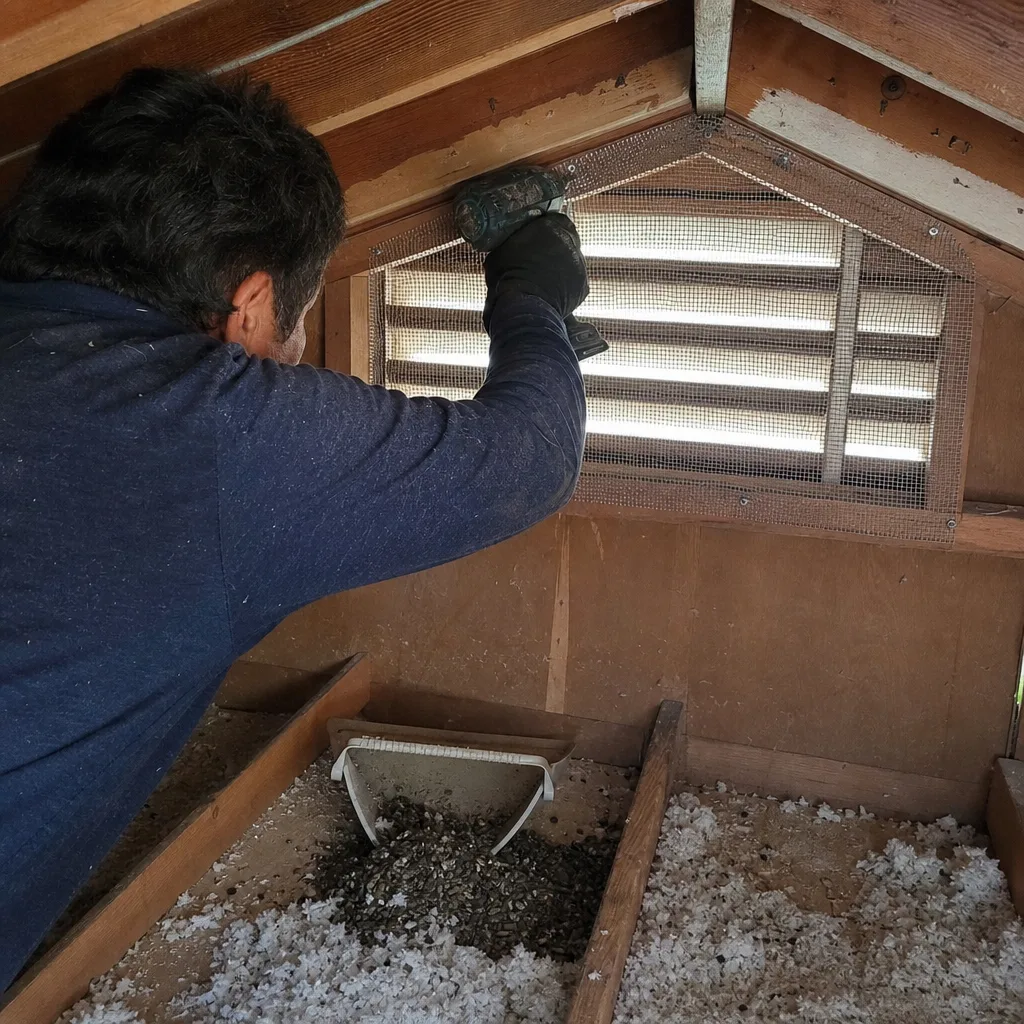
Here’s the good news: you can check for displacement without a full attic entry. Take a bright flashlight and stand at each exterior wall on the second floor (or the ceiling line on a single-story home). Look for visible gaps in the insulation through any accessible attic hatch, gable vent, or roof-mount vent. If you can reach a soffit vent from the outside, check for caked-on dust, insect nesting, or visible debris. A buildup of fine grit on the vent’s interior screen means the wind season deposited real material in your attic, and some of it likely landed on top of your insulation.
Here’s the spring protocol we recommend, in order:
- Check all exterior vents visually. Soffit vents, gable vents, and any roof turbines should be clean and unobstructed. If you see a visible dust cake, that’s a ventilation restriction.
- Peek into the attic at the eaves. Use the farthest point of light you can see. You’re looking for thin patches or bare spots at the perimeter. Uneven insulation is as bad as missing insulation in some zones because air moves through the path of least resistance.
- Inspect weather stripping on the attic access. The attic hatch is a common air bypass. If the hatch gasket has dried and cracked over a Palmdale summer, replace it now, before summer heat returns.
- Check under the house after heavy wind. Crawl space vents and vapor barriers take the same wind stress as the attic. A shifted or torn vapor barrier lets ground moisture rise into floor framing, which then travels upward through wall cavities.
- Note any new roof leaks. Palmdale doesn’t get much rain, but wind-driven rain can find the exact gap that a dry season never exposed. Look for water staining on ceiling drywall or attic sheathing.
If any of those checks turns up something that doesn’t look right, the sooner it’s addressed, the cheaper it is. Wind damage compounds: displacement gets worse each year it’s ignored.
Summer (June-September): Radiant Heat and Second-Floor Complaints
By late June, Palmdale attics become heat batteries. Dark composite shingles absorb solar radiation and can push attic temperatures past 140°F, even when outside air stays in the high 90s. That heat radiates downward into the ceiling plane, and your air conditioner fights it all day. The second floor always feels it first because it sits directly under the attic.
The diagnostic question most homeowners skip: is the problem your insulation’s thickness, or is it missing radiant barrier? These are different problems with different fixes. Fiberglass and cellulose insulation slow conductive heat transfer, which is heat moving through material. Radiant barrier reflects radiant heat, which is heat moving as infrared waves from a hot roof deck. In a high-desert climate like Palmdale’s, where clear skies and intense sun are constant, radiant heat is typically 60 to 70 percent of the total attic heat load. That means a home with excellent R-38 blown-in insulation but no radiant barrier can still feel brutally hot upstairs, because the dominant heat path is radiation, not conduction.
Here’s how to tell which one you’re dealing with:
- Attic is hot, ceiling is hot to the touch. This is primarily radiant heat. Attic insulation in Palmdale can only slow heat so much. A radiant barrier installed on the underside of the roof deck will reflect a large share of that infrared energy before it ever reaches the insulation.
- Attic is somewhat warm, ceiling is cool, but rooms are still warm. This points to air sealing or wall insulation gaps, not attic insulation. The heated air from the attic is finding its way around the insulation through bypasses.
- Upstairs is comfortable, but the AC runs constantly. The insulation is working, but the system is fighting total heat gain from windows, walls, and air leaks. A home energy audit will pinpoint where to focus.
We also recommend checking your attic temperature on the hottest afternoon of the year, just once. A properly vented and insulated Palmdale attic should stay within 10 to 15 degrees of the outdoor temperature. If it’s 103°F outside and your attic feels like a sauna, that gap tells you the system isn’t breathing and the insulation is absorbing more heat than it should. Products like Knauf or CertainTeed insulation installed to proper depth make a measurable difference, but ventilation matters just as much in this climate.
Fall (October-November): Fire Season Air Quality and Attic Bypasses
By October, the wind has calmed and the smoke season has arrived. Even when Palmdale isn’t directly threatened by fire, smoke from regional wildfires settles into the Antelope Valley and hangs for days. That smoke doesn’t just affect outdoor air. It enters homes through the attic, and it uses the exact same pathways that cost you money all year: under-sealed attic bypasses.
Here’s the part most people miss: smoke infiltration is a health issue, not a comfort issue. Fine particulate matter from wildfire smoke - PM2.5 and smaller - passes through gaps around recessed can lights, plumbing chases, and the attic access hatch. Once it enters the living space, it stays airborne for hours. The same bypasses that leak conditioned air in summer and heated air in winter are leaking smoke into your home in fall. Closing them is not just about saving money on the electric bill. It’s about keeping the air your family breathes cleaner during the worst air quality days of the year.
Fall is the right time for a comprehensive air sealing pass, and there are two reasons for the timing. First, the weather cooperates - working in an attic in October in Palmdale is pleasant, not dangerous. Second, you catch the smoke season before it peaks, and you close the gaps before winter’s cold air starts moving through them. Key areas to address:
- Recessed can lights. Older fixtures are vented directly into the attic. Even modern IC-rated fixtures often sit in a hole that was cut slightly too large. A sealed cover or replacement with an airtight fixture makes a real difference.
- Plumbing and electrical chases. Where pipes and wires pass from the living space into the attic, the gap around them is usually sealed with nothing. Expanding foam or caulk closes these permanently.
- The attic hatch. This is the single largest air bypass in most Palmdale homes. A simple weather strip and a few foam board panels on the attic side can reduce the gap dramatically.
- Top plates. The point where interior walls meet the ceiling is often open to the attic on both sides. A bead of caulk or a layer of spray foam along the top plate seals a line of leakage that runs the entire length of every interior wall.
For the homeowner who wants the most thorough approach, a home energy audit with blower door testing will quantify exactly how leaky the home is and where the worst bypasses are located. It turns air sealing from a guess into a measured, targeted fix.
Winter (December-February): Freeze Risk and Pipe Protection
Palmdale doesn’t advertise itself as a freezing climate, but overnight lows regularly dip below 28°F in December and January, sometimes for several consecutive nights. That’s cold enough to freeze a pipe that runs through an uninsulated garage wall, a crawl space with no skirting, or an exterior wall cavity with missing insulation. Frozen pipes in Palmdale usually don’t burst dramatically. They crack hairline fractures that leak only when the water pressure changes, and the homeowner doesn’t discover the problem until a wall stain appears weeks later.
Here are the highest-risk insulation gaps we find in Palmdale homes during winter:
- The garage wall shared with the house. In many local homes, the wall between the garage and the living space is insulated for temperature, but the walls facing outside are uninsulated. Pipes running through those outside-facing garage walls get cold. If your water heater is in the garage, the supply lines are often within two feet of an uninsulated exterior wall.
- The crawl space perimeter. Even with a vapor barrier, unconditioned crawl space air in winter drops to ground temperature. Pipes running under the floor on uninsulated joists can freeze in a hard cold snap. Insulating the rim joists and the crawl space perimeter makes a bigger difference than most people expect, and it also cuts floor drafts that make the whole house feel cold.
- Exterior wall plumbing in bathrooms and kitchens. When a sink is mounted on an exterior wall, the supply lines often run inside that wall cavity. If the cavity is missing insulation - common in older Palmdale construction - the pipes lose heat to the outside air. Insulating that cavity with a dense fill product like Rockwool or a closed-cell spray foam addresses both the freeze risk and the comfort problem at the same time.
Winter is also the time to check crawl space encapsulation. A vapor barrier that was torn in spring wind season or disturbed during the summer won’t protect your floor framing when winter moisture moves in. We look for standing water, heavy condensation on the vapor barrier, and any sign that ground moisture is making its way into the floor system. Damp floor framing rots slowly, and in a climate as dry as Palmdale’s, people don’t think about it until the damage is done. Spray foam insulation in Palmdale is a popular winter fix because it seals and insulates in one application, especially around rim joists and pipe penetrations.
Year-Round: The Utility Bill Metric That Tells You the Truth
You don’t need a thermal camera to know if your insulation is failing. You need two numbers: your cooling degree days (CDD) for a given month and your actual kilowatt-hour usage. CDD measures how much cooling your home “should” need based on outdoor temperature. Your utility bill measures how much cooling you actually consumed. When the ratio between those two numbers starts to drift upward across comparable months, your thermal envelope is leaking somewhere.
Here’s a practical version of the check. Pull your July or August electric bill from three years ago. Compare it to this year’s for the same month. If the outdoor temperature was roughly the same but your usage is 20 percent higher, something has changed. Insulation doesn’t wear out like a roof, but it gets displaced, compressed, moisture-damaged, or bypassed. Rodents nest in it. Contractors move it aside during one repair and never put it back. Attic work from a satellite dish install or a recessed light replacement can push insulation into a pile in a corner, leaving a bare patch over a bedroom. These aren’t failures of the material. They’re failures of the installation, and they happen gradually.
If that usage drift is happening, don’t guess at the cause. A home energy audit with thermal imaging will show exactly where the heat is entering in summer, where it’s leaving in winter, and where the air is moving year-round. It’s the diagnostic starting point that makes every other insulation decision more targeted, and in our experience, it usually pays for itself in avoided unnecessary work. We’ve been doing these audits in Palmdale for years, and the most common finding is never a house-wide insulation failure. It’s three or four specific gaps doing ninety percent of the damage.
Common Mistakes to Avoid
- Checking your attic only in summer. By the time summer heat makes the problem obvious, the damage happened months earlier. Spring is when wind displacement occurs, and that’s when you catch it early.
- Adding insulation over displaced insulation. If your blown-in insulation has been pushed away from the eaves, blowing more on top creates uneven depth and doesn’t fix the bare perimeter. Remove and redistribute the existing material first.
- Ignoring the attic hatch. The hatch is usually the largest single air leak in the attic. A sheet of drywall with no weather stripping equals an open window year-round.
- Focusing on R-value while ignoring air sealing. In Palmdale’s climate, uncontrolled air movement often costs more than insufficient insulation depth. Seal first, then insulate.
- Skipping the crawl space. The home’s thermal envelope includes the floor. In winter, a cold floor makes the whole house feel cold regardless of attic insulation.
- Using fiberglass batts in windy vented attics. Loose-fill and batt products behave differently under wind pressure. If your attic ventilation creates sustained airflow, loose-fill needs to be properly contained at the eaves to stay in place.
- Sealing soffit vents because of dust. The answer to a dusty soffit vent is cleaning the vent, not closing it. Ventilation moves the hot air out, and sealing soffit vents traps heat and moisture in the attic.
When to Call a Professional
Call a professional when you see visible displacement or thin spots in the insulation, when you notice a utility bill trend that doesn’t match the weather, when you smell smoke inside the house on high-AQI days, or when you suspect pipes in exterior walls are freezing. These are not DIY fixes, and each one points to a thermal envelope problem that will only compound. Warmline Insulation Co. offers free estimates in Palmdale. Call (661) 613-2043 and a live person answers, 24/7. We’ll send a background-checked, uniformed technician to evaluate what’s happening, and most seasonal insulation repairs are completed in a single visit. Our 90-Day Done Right Promise means if it’s not done right, we make it right, in writing.
Frequently Asked Questions
Check your attic insulation visually at least twice a year: once in April after wind season and once in October before winter freezes. A more comprehensive check that includes crawl space and wall cavities should happen annually. Call (661) 613-2043 for a free estimate if anything looks off.
Yes. Overnight lows in December and January regularly fall below 28°F, which is enough to freeze pipes in uninsulated exterior wall cavities, garage walls, and crawl spaces. Insulating these areas before winter is far cheaper than repairing a cracked pipe and water damage. Most of these jobs can be completed in a single visit.
In Palmdale’s high-desert climate, radiant heat is the dominant summer heat load, so a radiant barrier often delivers more noticeable upstairs relief than adding extra insulation alone. The ideal solution typically includes both: adequate insulation depth for conductive heat and a radiant barrier for infrared heat. Ask about our $89 Seasonal Tune-Up to assess what your home actually needs.
Look for visible bare spots or thin patches along the attic perimeter, especially near soffit vents. Uneven depth is the telltale sign. If you can’t check safely, call us and we’ll inspect it for you. Estimates are free, and a live person answers 24/7 at (661) 613-2043.
Most seasonal insulation repairs, including air sealing, vapor barrier repair, and local insulation redistribution or top-up, are completed in a single visit. We do pricing upfront with no surprises, and the work is backed by our 90-Day Done Right Promise. We also offer $50 off any repair over $250.
For attics, we work with proven products from Knauf, CertainTeed, Rockwool, and Icynene, matched to the specific demands of Palmdale’s wind, heat, and cold cycle. For exterior wall cavities and rim joists, closed-cell spray foam or dense Rockwool works well. The right choice depends on the application, and that’s exactly what our home energy audit is designed to determine.
The Bottom Line
Palmdale’s four-season thermal cycle punishes insulation in four different ways, and each one has a specific inspection window. Spring is for wind damage, summer is for radiant heat diagnosis, fall is for smoke-season air sealing, and winter is for freeze protection. Catch each problem in its own season and you’ll pay for a small repair instead of a full replacement. The real signal that something has shifted is your utility bill drifting away from the weather, and the smartest diagnostic tool is a home energy audit that shows you exactly where the energy is going. For more guides & resources, explore our blog, and if you see any of the warning signs in this guide, call Warmline Insulation Co. at (661) 613-2043. A live person answers, the estimate is free, and we’ll be honest about what your home actually needs.
Written by Neil Ashford, Owner at Warmline Insulation Co., serving Palmdale since 2011.