
Last updated September 16, 2026
Attic Insulation Maintenance Checklist for Palmdale Homeowners
A single compromised attic hatch gasket in Palmdale can let enough conditioned air escape to add $15 to $25 per month to your cooling bill, and it’s the last thing any homeowner thinks to check. Most attic insulation guides for Palmdale don’t exist-most checklists floating around online were written for Seattle or Atlanta, where the enemy is rain and pine needles. Palmdale’s UV intensity, rodent pressure from the surrounding Mojave-adjacent desert, and monsoon-season humidity spikes create a maintenance reality those lists never address. This guide is built around what actually goes wrong in high-desert attics, not what goes wrong somewhere else.
Quick Answer
Attic insulation maintenance in Palmdale should follow a twice-yearly inspection schedule: once after Santa Ana wind season ends in November and again in April before summer heat arrives. The highest-priority checks are attic hatch gasket integrity, rodent tunneling evidence, windblown debris blocking soffit vents, recessed light cover seals, and blown-in insulation depth against compression. Most Palmdale homes we inspect have at least one of these five failures actively costing the owner money every month.
Table of Contents
- Why Palmdale’s Climate Demands a Different Maintenance Schedule
- The Twice-Yearly Inspection Calendar for Palmdale Homes
- Rodent Tunneling and Nesting: The Warranty-Killing Failure Mode
- Soffit and Ridge Vent Flow After Antelope Valley Wind Events
- Recessed Light Air Sealing: The Incense Test
- When Compression Has Stolen Your Blown-In Insulation’s R-Value
- Attic Hatch Gaskets and Access Point Seals
- Common Mistakes to Avoid
- When to Call a Professional
- Frequently Asked Questions
- The Bottom Line
Why Palmdale’s Climate Demands a Different Maintenance Schedule
Palmdale sits at roughly 2,600 feet in the Antelope Valley, which means our summers run hotter and our nights cool down faster than coastal California. A typical Palmdale attic hits 140 to 160 degrees on a July afternoon. That temperature swing, repeated daily for four to five months, stresses every seal, gasket, and adhesive in your attic’s air barrier system.
The second factor is wind. Santa Ana events push sustained 30 to 50 mph gusts through the Antelope Valley, carrying fine Mojave dust, tumbleweed fragments, and micro-debris into every attic ventilation opening. We routinely find a quarter-inch layer of silt packed into soffit vents after a single strong wind season. That dust doesn’t just block airflow; it absorbs into fiberglass and cellulose insulation, adding weight that causes settling and compression over time.
The third factor is monsoon humidity. July and August bring brief but intense humidity spikes, occasionally pushing attic relative humidity above 70% for days at a stretch. In Palmdale, that combination of high heat and intermittent moisture accelerates the breakdown of cheaper foam gaskets and can create condensation spots on poorly sealed ductwork running through the attic.
None of this is theoretical. Neil Ashford and the Warmline Insulation Co. team have been inspecting Palmdale attics since 2011, and the failure patterns are consistent year after year. The good news is that a disciplined maintenance routine catches most problems before they cost real money.
The Twice-Yearly Inspection Calendar for Palmdale Homes
If you only check your attic insulation once a year, you’re missing damage that happens during the other six months. Palmdale’s weather pattern splits the year into two distinct threat seasons, and each one damages your attic differently.
April Inspection: Pre-Summer Heat Preparation
- Check the attic hatch gasket. Winter temperature swings have had six months to degrade foam weatherstripping. Press your hand along the hatch perimeter while it’s closed; any gap you can feel is a leak point.
- Verify blown-in insulation depth. Cellulose and fiberglass settle during winter. If your blown-in insulation in Palmdale was originally installed at 14 inches and now measures 10 or less, you’ve lost roughly 30% of your effective R-value.
- Inspect for winter rodent activity. Desert rodents seek warmth from November through March. Look for tunnels, fur, droppings, and shredded insulation material.
- Test recessed light covers. Use the incense test described below. A failed cover in a Palmdale summer pours conditioned air into a 150-degree attic all day long.
- Clear soffit vents. April is when winter’s windblown debris load becomes apparent. Blocked soffits starve your attic’s ventilation system right before the hottest months.
November Inspection: Post-Santa Ana Season Assessment
- Recheck soffit and ridge vents. October and November Santa Ana events deliver the year’s heaviest debris load. This is the highest-priority post-wind check.
- Check for monsoon moisture damage. Look for dark staining on roof decking, damp insulation patches, or rust on metal fasteners, all signs that July and August humidity found a leak path.
- Inspect insulation for compaction from summer heat. Repeated 140-degree days can cause certain blown-in products to compact prematurely, especially in low-pitch roof cavities with limited ventilation.
- Verify duct connections and seals. Attic ductwork expands and contracts through the summer. Loose connections that started in June are fully separated by November.
- Look for pest entry points before winter. Rodents begin searching for warm nesting sites in late fall. Seal any gap larger than a quarter-inch before the pressure starts.
Each of these inspections takes 20 to 30 minutes for a typical Palmdale ranch or track home. What you find determines whether you need a simple fix or a call to a professional.
Rodent Tunneling and Nesting: The Warranty-Killing Failure Mode
Desert woodrats, house mice, and roof rats are active across Palmdale neighborhoods, but the pressure is worst in areas bordering open desert, including Rancho Vista, Anaverde, and the western edges of the city near the foothills. These animals don’t just visit attics; they excavate them. Rodents tunnel through blown-in insulation to create travel lanes, shred batts for nesting material, and urinate and defecate throughout the contaminated zones.
Here’s what most Palmdale homeowners don’t know: rodent contamination voids most insulation manufacturer warranties. Owens Corning, Johns Manville, and Knauf all exclude damage from pest activity in their warranty language. GreenFiber’s cellulose products carry similar exclusions. If rodents have nested in your attic insulation, the manufacturer will not cover replacement costs, regardless of how new the installation was.
How to Spot Rodent Damage in Palmdale Attics
- Tunnels through blown-in insulation: Look for depressed pathways, typically 2 to 3 inches wide, running between entry points and nesting zones. These tunnels compress insulation and eliminate its thermal resistance along the path.
- Shredded batting material: Rodents tear apart fiberglass batts to create soft nesting chambers. The damage is usually concentrated in corners, around ductwork, and near the attic access.
- Droppings and urine staining: Fresh droppings are dark and moist; old droppings are gray and crumbly. Urine causes dark streaking on insulation and wood framing.
- Chewed wiring and duct sheathing: Rodents gnaw on electrical insulation and flexible duct jackets, creating both a fire hazard and an air-leak problem simultaneously.
- Unusual odor in living spaces below: A persistent ammonia-like smell coming from ceiling registers often indicates an active rodent latrine in the attic insulation directly above.
If you find evidence of rodent activity, the sequence matters. Rodent proofing comes first, then contaminated insulation removal, then air sealing, then fresh insulation installation. Warmline handles all four stages, which is why Palmdale homeowners dealing with pest-compromised attics often tell us they’re relieved to deal with one contractor instead of coordinating an exterminator, a cleaner, and a separate insulation company.
Soffit and Ridge Vent Flow After Antelope Valley Wind Events
Your attic’s ventilation system only works when intake and exhaust are balanced. Soffit vents bring in outside air at the eaves; ridge vents or static roof vents let hot air escape at the peak. The system relies on natural convection, hot air rising and pulling fresh air in behind it. In Palmdale, that balance gets disrupted every time a strong wind event blows through the Antelope Valley.
The problem isn’t just visible debris like leaves and tumbleweeds. Fine Mojave dust, the same talc-like powder that coats your patio furniture during Santa Ana season, gets driven deep into soffit vent channels. Add a little monsoon humidity and that dust cakes into a mud-like paste that blocks airflow even when the vent looks clear from the outside.
Checking Your Ventilation Balance
- Inspect soffit vents from inside the attic. Use a flashlight to check if you can see daylight through each vent. If the light is blocked or diffused by a dust layer, airflow is restricted.
- Check the ridge vent for debris buildup. Ridge vents can accumulate dust and small debris that reduces exhaust capacity. From inside the attic, look along the ridge line for visible airflow gaps.
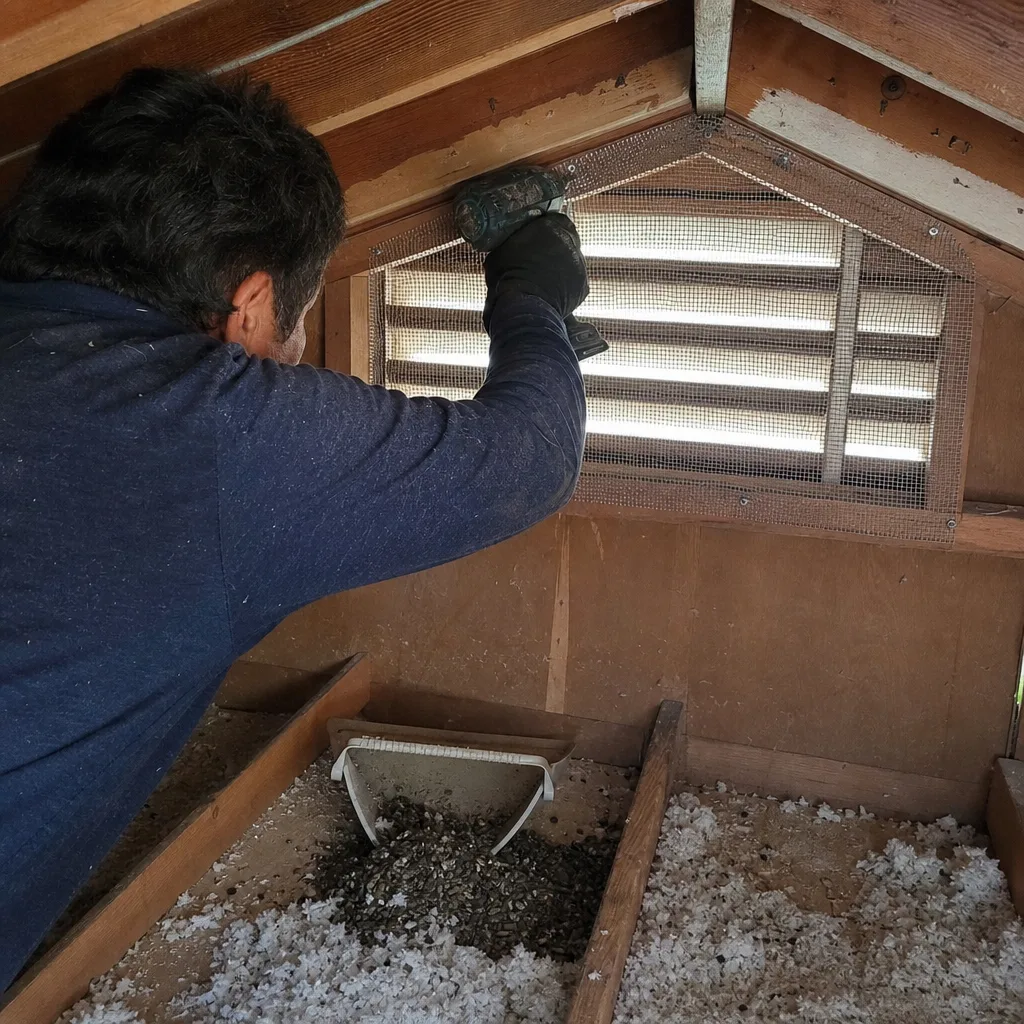
- Verify insulation hasn’t drifted over soffit vents. In Palmdale’s windy conditions, lightweight blown-in insulation can shift and cover soffit openings, especially if baffles were never installed or have come loose.
- Look for wind-driven insulation displacement. Strong gusts can push loose-fill insulation away from eaves and create bare spots along exterior walls, a heat-transfer weak point.
If your soffit vents are blocked and your ridge vent is clear, the attic still overheats because there’s no intake air feeding the exhaust. The result is a hotter attic, higher cooling bills, and accelerated shingle aging. If the ridge is blocked but soffits are open, heated air stagnates in the upper attic cavity with the same result. Both failure modes are common in Palmdale homes we’ve inspected, and both are fixable with a single service visit.
Recessed Light Air Sealing: The Incense Test
Recessed can lights are essentially holes cut through your ceiling into the attic. Older units, especially non-IC-rated fixtures from the 1980s and 1990s, leak conditioned air into the attic around the clock. Even newer fixtures with attic-side covers degrade over time because the covers are held in place with adhesive or simple clips that fail under Palmdale’s extreme attic temperature swings.
Here’s how to test whether your existing recessed light covers have failed, using nothing but a stick of incense.
- Turn off your HVAC system. You want still air inside the house so air movement indicates a leak path, not forced air from your system.
- Close all windows and exterior doors. This eliminates cross-breeze interference.
- Light a stick of incense and hold it near the trim ring of each recessed light. Stand on a ladder or step stool so the incense smoke rises directly alongside the fixture.
- Watch the smoke. If the smoke drifts upward or gets pulled toward the fixture, air is moving through the fixture opening into the attic. A properly sealed fixture shows no smoke movement.
- Repeat for every recessed light in the ceiling plane below the attic. In a typical Palmdale home with 8 to 12 can lights, two or three failed seals is common.
If you find failed seals, the fix depends on the fixture type. IC-rated fixtures can often be air-sealed from the attic side with dedicated covers or two-part foam kits. Non-IC fixtures require different handling because of fire safety clearances. This is one area where we recommend a professional touch. Our team at Warmline has sealed thousands of these fixtures across Palmdale, and we’ve found that the difference between a correct seal and a fire-hazard shortcut comes down to knowing the fixture’s heat rating before applying any material. When we perform attic insulation in Palmdale, recessed light sealing is always part of the scope because an insulated attic with leaky can lights is still a leaky attic.
When Compression Has Stolen Your Blown-In Insulation’s R-Value
Blown-in insulation works by trapping air in the spaces between fibers. Compress that insulation and you squeeze out the trapped air, along with most of its thermal resistance. The math is unforgiving: cellulose rated at R-3.7 per inch delivers that rating only at its designed density. Compress 14 inches down to 9 inches and you haven’t just lost 5 inches of depth; you’ve lost the air-trapping capability throughout the entire compressed layer.
Palmdale homeowners face compression from three sources that milder climates don’t experience. First, contractors and technicians walking through the attic during HVAC service, electrical work, or cable installation compress the loose-fill under their weight, which is why we tell homeowners that any attic traffic matters. Second, the weight of accumulated Mojave dust saturating the top layer can compress the insulation beneath over a period of years. Third, rodents compacting insulation into dense nesting zones create localized compression that spreads as tunnels collapse.
Visual Thresholds for Compression Damage
- Overall depth loss: If your blown-in insulation was installed at 14 inches and now measures 10 inches or less across most of the attic floor, your effective R-value has dropped by roughly 25 to 30%.
- Footprint patterns: Distinct compressed depressions along service pathways indicate recurring traffic compression. These paths become thermal bridges that show up on cold mornings as frost lines or clearer roof areas.
- Floating or matted top layer: When the top inch of cellulose or fiberglass forms a crusty mat and the material beneath feels dense rather than fluffy, years of dust and humidity have degraded the product’s loft.
- Bare spots near eaves: Wind-driven displacement and gravity settle insulation away from the roofline over time, creating a 6 to 12 inch bare strip around the attic perimeter that leaks heat directly into the outdoors.
When compression is the diagnosis, the fix is usually a top-off or a full removal and replacement, depending on contamination levels. A top-off with fresh material restores the designed R-value at a fraction of the cost of full replacement. During an attic insulation inspection in Palmdale, our technicians measure depth in multiple locations and calculate exactly how much material is needed to hit the R-60 or R-38 target recommended for our climate zone. Most top-off jobs are completed in a single visit.
Attic Hatch Gaskets and Access Point Seals
The attic access hatch is the single most overlooked air leak in a Palmdale home. It’s a hole in your ceiling, usually 22 by 30 inches or larger, covered by nothing more than a piece of drywall sitting on trim. The gasket material, typically foam weatherstripping or rubber bulb seal, degrades under attic heat and repeated use. Once the gasket fails, the hatch becomes a chimney for conditioned air.
The leak rate on a failed hatch gasket is surprisingly high because the attic is under positive pressure from rising hot air while your living space is under slight negative pressure from the stack effect and HVAC return airflow. That pressure differential actively pulls cooled air through the gap. One failed hatch in a Palmdale summer can account for 10 to 15% of total envelope air leakage.
What to Check
- Open the hatch and inspect the gasket surface. Replacement is needed if the foam is flattened, cracked, or missing sections.
- Check the hatch’s seated position. A warped hatch door from attic moisture or careless handling won’t seat evenly, creating gaps even with a good gasket.
- Look for dust streaking around the hatch trim. Dark dust lines indicate airflow through the gap, which filters dust from the air passing through.
- Check for insulation coverage on the hatch door itself. An uninsulated hatch door is a thermal hole even when the gasket seals properly. The hatch should carry at least R-30 in Palmdale’s climate.
For Palmdale homeowners with pull-down stair units, the inspection is more involved. Pull-down stairs almost never seal well from the factory, and the folding mechanism wears in ways that defeat even good gasket replacement. In our experience, the long-term fix for pull-down access is an insulated, gasketed cover box installed over the stair opening from the attic side. The cost of that fix typically pays for itself inside of two summers in reduced cooling load.
Common Mistakes to Avoid
- Checking attic insulation only when the HVAC bill spikes. By the time you notice a $50 per month increase, the underlying damage has been accumulating for months or years. Bi-annual checks catch problems before they show up as billing surprises.
- Assuming blown-in insulation never needs attention. Many Palmdale homeowners believe loose-fill insulation is a one-time installation. In reality, settling, wind displacement, and contamination mean that even good installations lose 20 to 30% of their effectiveness within 10 to 15 years.
- Ignoring rodent signs because the animals “aren’t in the living space.” Rodents in the attic damage insulation, chew wiring, and contaminate the air that leaks down through the ceiling plane. Attic rodents are a living-space problem even if you never see them downstairs.
- Blocking soffit vents with new insulation. Well-meaning DIYers add insulation to the attic and accidentally bury the soffit vents, which starves the ventilation system and creates summer overheating and winter condensation. Baffles must be installed before adding material near the eaves.
- Using duct tape to seal attic leaks. Standard duct tape adhesive fails within a year or two in Palmdale’s attic temperatures. Proper air sealing uses mastic, metal tape rated for high heat, or two-part foam; anything else is a temporary patch that creates a false sense of security.
- Replacing insulation without addressing the underlying air leaks. New insulation in a leaky attic is like putting on a thicker coat with the zipper open. Air sealing must happen before or during insulation replacement, or the new material will underperform by the same margin as the old.
- Assuming a newer home doesn’t need inspection. Even Palmdale homes built after 2010 have attic access hatches, recessed lights, and ventilation systems that age. Newer construction often used the cheapest available gaskets and covers, which fail faster than quality retrofits.
When to Call a Professional
Some attic maintenance tasks are genuinely safe and simple for a homeowner, and others aren’t. Checking hatch gaskets, running the incense test on recessed lights, and visually scanning for rodent evidence are all reasonable DIY tasks. But there are moments when calling a professional is the right call, and unfortunately, waiting too long usually makes those moments more expensive than they needed to be.
Call a professional if you find rodent contamination beyond a few droppings. Removal of contaminated insulation requires protective equipment, disposal protocols, and a plan for preventing re-infestation. Call a professional if your blown-in insulation shows significant compression or displacement, especially if you’re unsure what the original depth was. Call a professional if multiple recessed lights fail the incense test, especially if you have older non-IC fixtures where fire safety clearances matter. The spray foam insulation option in Palmdale also requires professional installation, no DIY kit available at a hardware store comes close to matching a professionally applied open-cell or closed-cell system.
Warmline Insulation Co. offers free estimates in Palmdale. Call (661) 613-2043 and a live person answers, 24/7. We’ll send a background-checked, uniformed technician to diagnose the problem and give you upfront pricing before any work begins. Every job is backed by our 90-Day Done Right Promise: if it’s not done right, we make it right.
Frequently Asked Questions
Attic insulation in Palmdale should be inspected twice a year, once in April before summer heat arrives and once in November after Santa Ana wind season ends. The April inspection catches winter rodent damage and hatch gasket failures before cooling season begins, while the November inspection assesses windblown debris, monsoon moisture damage, and pre-winter pest entry points.
Basic maintenance, including hatch gasket replacement and recessed light cover repair, typically ranges from $150 to $400 depending on the number of fixtures and the condition of existing seals. A blown-in insulation top-off in Palmdale runs between $1,200 and $2,800 depending on attic size and target R-value. Full removal and replacement after rodent contamination costs more due to disposal and sanitization requirements. Call (661) 613-2043 for an exact quote, estimates are free and every price is given upfront before work starts.
Replacement is warranted when insulation is contaminated by rodent urine or droppings, saturated by moisture, or compressed to less than half its designed depth. A top-off is appropriate when the existing material is dry, uncontaminated, and simply needs additional depth to restore the target R-value. Warmline technicians determine which option applies during a free inspection.
Yes, homeowners can safely perform visual inspections of hatch gaskets, insulation depth, rodent evidence, and soffit vent condition without special training. Use a flashlight, wear a dust mask, and move carefully on joists rather than stepping directly on drywall or insulation. The incense test for recessed lights is also safe and straightforward. Leave contaminated insulation removal and any spray foam work to professionals.
Palmdale follows California Title 24 energy code, which requires R-38 to R-60 attic insulation for new construction and major remodels depending on the specific compliance path used. Older Palmdale homes built before the 1980s often have R-11 or R-19, less than half the current standard. Upgrading to the modern requirement typically cuts attic-related heat transfer by 50 to 70% in our Palmdale climate.
Attic insulation in Palmdale’s high-heat, dusty climate typically lasts 15 to 25 years before performance degradation warrants replacement. Fiberglass batts can last longer if protected from rodents and moisture, while blown-in cellulose and fiberglass tend to settle and compress faster under Palmdale’s extreme temperature cycling. Insulation that has been contaminated by rodents or water should be replaced immediately regardless of age.
The Bottom Line
Attic insulation maintenance in Palmdale is a twice-yearly discipline that pays for itself through lower cooling bills, longer equipment life, and avoided emergency repairs. The checklist is simple: check the hatch gasket, look for rodent damage, clear soffit vents, test recessed light seals, and measure blown-in depth. What makes it Palmdale-specific is the timing, April before the heat and November after the winds, and the failure modes, Mojave dust compaction, desert rodent pressure, and UV-assisted seal degradation. Homeowners who follow this schedule catch problems when they’re cheap to fix. Homeowners who don’t wind up paying for full replacement. Warmline Insulation Co. has been serving Palmdale since 2011, and every inspection we do confirms the same truth: the attic is the most neglected room in the house, and it’s the one stealing the most money every month it stays neglected. For more guides & resources on keeping your home efficient, visit our blog.
Written by Neil Ashford, Owner at Warmline Insulation Co., serving Palmdale since 2011.