
Last updated September 16, 2026
DIY vs Professional Insulation: The Palmdale Homeowner’s Decision Guide
California is one of only a handful of states where an improperly installed DIY insulation job can legally require remediation before a home sale closes. That’s not a scare tactic. It’s Title 24, and it’s the reason a $400 weekend project in Palmdale can become a $3,000 closing headache three years later. This guide gives you an honest capability and risk assessment, not a cheerleading argument for either side. For more guides & resources on Palmdale insulation, see our blog. We’ll cover which insulation tasks are genuinely safe to tackle yourself, which ones carry real legal and physical risk, and how to decide without wasting money or compromising your home.
Quick Answer
DIY insulation makes sense in Palmdale for small, accessible, low-risk tasks like weatherstripping, outlet gaskets, and replacing a few batts in an open attic with no existing moisture or rodent issues. Professional installation is the right call for blown-in attic insulation, spray foam, crawl space vapor barriers, and anything requiring a permit, because those projects carry code compliance, safety, and warranty consequences that outweigh the labor savings. If your project involves air sealing, ventilation, or Title 24 documentation, hire a licensed contractor.
Table of Contents
- The Title 24 Reality Check Palmdale Homeowners Never Hear About
- Three Insulation Tasks That Are Genuinely DIY-Appropriate in Palmdale
- Four Insulation Projects That Carry Real Risk
- The Equipment Reality Check: What a Blower Rental Actually Gets You
- What Palmdale Attics Look Like (And Why That Matters)
- The Break-Even Analysis: When Professional Installation Actually Costs Less
- Common Mistakes to Avoid
- When to Call a Professional
- Frequently Asked Questions
- The Bottom Line
The Title 24 Reality Check Palmdale Homeowners Never Hear About
Most insulation guides published for a national audience never mention California’s Title 24 building energy efficiency standards. That’s a glaring omission for Palmdale homeowners, because Title 24 doesn’t just set requirements for new construction. It applies to additions, alterations, and in many cases, the documentation trail that follows your home into a resale transaction.
Here’s the part that actually matters: when you sell a home in California, the seller must disclose known improvements and provide documentation of work performed. If insulation was added without a permit, or if it doesn’t meet the installed density and coverage requirements Title 24 expects, the buyer’s inspector can flag it. At that point, you’re not just redoing insulation. You’re paying for removal, remediation, and reinstallation on a closing timeline, where expedited work costs more.
This doesn’t mean every insulation project needs a permit. Small repairs don’t. But the moment you’re adding more than a threshold quantity of new insulation, or touching areas where the building envelope’s thermal barrier is being altered, the rules shift. A licensed contractor knows where that line sits in Palmdale and Lancaster, where local enforcement follows Los Angeles County code amendments on top of state standards.
The practical takeaway: DIY insulation in California carries a documentation risk that most other states simply don’t impose. If you’re planning to sell within five to seven years, that risk has a dollar sign attached to it.
Three Insulation Tasks That Are Genuinely DIY-Appropriate in Palmdale
We’re not going to tell you everything requires a pro. That’s not true, and homeowners who can handle simple, contained tasks should do them. The key is knowing where the line sits between a contained repair and a project that affects the building envelope’s performance.
1. Weatherstripping and Door Sweeps
This is the highest-ROI DIY project in Palmdale, full stop. The temperature swings between Antelope Valley days and nights put constant stress on door seals and window gaskets. Replacing worn weatherstripping around exterior doors takes an afternoon, costs under $40 in materials, and immediately stops the drafts you feel when the wind picks up off the foothills. No permit. No code compliance question. No risk. This project almost always pairs well with outlet gasket replacement, since both address air infiltration at the same envelope weak points.
2. Outlet and Switch Plate Gaskets
Exterior wall outlets and light switches leak conditioned air year-round. In Palmdale, where summer cooling is the dominant energy cost, sealing these penetrations reduces the stack effect that pulls hot attic air into living spaces. Foam gaskets cost about $3 for a six-pack. Installation requires a screwdriver and ten minutes per outlet. This is about as close to zero-risk DIY insulating as exists.
3. Accessible Batt Replacement
If you have an open attic with batts that have been shifted, compressed, or damaged by rodents, and the area is easily reachable without walking on joists, replacing those batts is a reasonable DIY project. The operative word is accessible. You need clear headroom, a stable walking surface, no evidence of moisture, and no contamination. We’ve been in hundreds of Palmdale attics, and we can tell you: a surprising number of homes built in the 1980s and 1990s have batt insulation that was never properly installed in the first place, with gaps and compression that cut effective R-value by 30% or more. Fixing visible gaps is worthwhile. But the moment you’re working near the eaves, on a low-pitch roof, or around existing electrical, the risk calculus changes.
Four Insulation Projects That Carry Real Risk
Some insulation work is dangerous to do incorrectly and dangerous to do at all without training and equipment. These four projects are where we see the most expensive DIY failures in Palmdale.
1. Blown-In Attic Insulation
The concept looks simple: rent a blower, feed in the material, spread it around. The reality is that achieving target density without a blower door test is guesswork. And density is the number that determines actual R-value achieved, not the label on the bag. Undershoot the density by 20% and you’ve paid for R-38 but installed R-30. More common, though, is overshooting in the wrong places and blocking soffit vents, which creates a moisture problem in a high-desert climate that already cycles through extreme temperature swings.
2. Spray Foam Insulation
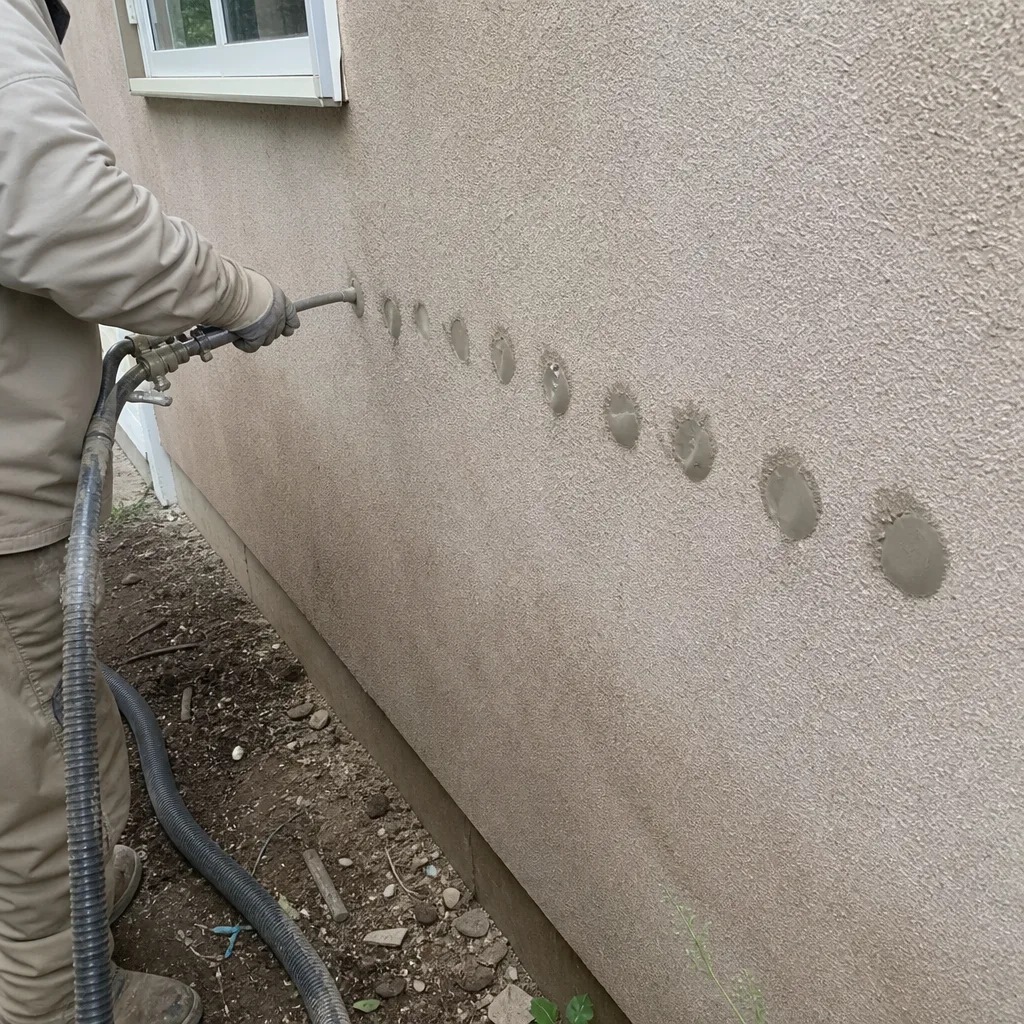
Spray foam is a chemical reaction happening at the end of a gun, not a material you simply apply. Off-ratio foam, improper substrate temperature, or incorrect thickness application can result in foam that off-gasses, shrinks, or fails to cure properly. The material cost of fixing a bad DIY spray foam job often exceeds the original quote for professional installation. This is also the insulation category where manufacturer warranties matter most: Icynene and Demilec warranties require certified installers. No certification, no warranty. Simple as that.
3. Crawl Space Vapor Barrier Installation
Palmdale’s dry climate doesn’t eliminate crawl space moisture. It concentrates it where irrigation runs near foundations and where temperature differentials create condensation. Installing vapor barrier incorrectly, with gaps at seams, penetrations, or the foundation wall junction, creates a concealed moisture trap. You won’t see the mold and rot until it’s advanced. Proper crawl space work in Palmdale requires understanding how our soil conditions interact with foundation ventilation, and that’s knowledge built from repeated local installations, not a single YouTube tutorial.
4. Any Project Requiring a Permit
Some insulation projects in Palmdale cross the threshold into permit territory. The moment you’re altering the thermal envelope beyond repair-replacement scope, adding insulation where none existed, or changing ventilation systems, you may need a permit from the City of Palmdale’s Building & Safety division. Unpermitted work doesn’t just create a resale flag. It can also give your insurance company a reason to deny a claim if the work is later connected to a problem.
The Equipment Reality Check: What a Blower Rental Actually Gets You
Home Depot in Palmdale rents insulation blowers for about $200 per day. That number gets quoted in every DIY forum thread as proof that professional installation is overpriced. But the blower is the cheapest part of the equation, and it’s the part that least determines your outcome.
- The blower rental gets you a machine. It doesn’t get you a density measurement. Professional installers verify coverage and density as they work, using tools and experience that confirm the material is performing at the labeled R-value. Without a blower door test before and after, you have no way to confirm you hit target density. You’re guessing.
- You’ll also need a respirator, goggles, a work light, and likely a second person feeding the hopper. Fiberglass and cellulose dust in a confined Palmdale attic at 130 degrees in August is not a solo job.
- The material itself. Big-box cellulose and fiberglass are fine products. But professional installers select specific materials, from Owens Corning to GreenFiber, based on the attic conditions, existing insulation type, and ventilation profile. The wrong fill material over existing batts can trap moisture.
- Your time. A first-time DIY blown-in project in a typical Palmdale ranch home takes a full weekend. That’s two days in a hot attic, at a time when you’d rather be doing almost anything else.
The equipment math is not “$200 DIY vs $1,800 professional.” It’s “$200 plus materials plus two days plus zero verification plus zero warranty versus a guaranteed outcome backed by a written commitment.” More on that guarantee math in the break-even section below.
What Palmdale Attics Look Like (And Why That Matters)
Palmdale housing stock has a few consistent characteristics that national DIY guides simply don’t address. We’ve spent over 15 years working in these attics, and in our experience, these are the conditions that routinely turn a confident DIY project into a problematic one.
Low-Pitch Rooflines and Tight Eaves
A substantial portion of Palmdale homes, particularly in the neighborhoods built during the 1980s and 1990s boom, have low-pitch roofs with shallow attic access at the eaves. That means the area where you need to install baffles and verify soffit ventilation is also the hardest area to reach. Working on your stomach, in fiberglass, near roofing nails protruding through the decking, in a confined space at 120 degrees, is not a situation where careful work thrives. We regularly see DIY attempts where the center of the attic got plenty of insulation and the eaves got none, because the installer physically could not reach them safely.
Existing Rodent or Pest Contamination
The Antelope Valley has rodents. Not more than anywhere else, but the same population that exists anywhere with open space and food sources. Rodent droppings in attic insulation are a serious health hazard, and disturbing contaminated insulation requires PPE and containment protocols that most homeowners don’t have. If your attic shows evidence of rodent activity, the project is no longer about insulation. It’s about removal, sanitization, air sealing, and then re-insulation. That’s a professional sequence for a reason.
Original 1980s Batt Installations
Homes built in Palmdale’s first major development wave often have original batt insulation that was installed against the roof deck rather than the attic floor, or installed with no air sealing at all. These attics aren’t just under-insulated. They’re under-ventilated and thermally broken in ways that require diagnosis before any new material is added. Adding more insulation on top of a flawed design compounds the problem.
The Break-Even Analysis: When Professional Installation Actually Costs Less
The standard DIY argument is that you save on labor. That’s true in a narrow sense, but it ignores what professional installation includes that a blower rental doesn’t. Here’s the math the way we see it as a Palmdale insulation contractor.
| Factor | DIY Blown-In Attic | Professional Installation |
|---|---|---|
| Equipment rental | $200 (one day, Home Depot Palmdale) | $0 (included) |
| Materials | $600-$900 (big-box fiberglass or cellulose) | Included in quote, often lower per-bag cost from trade suppliers |
| Air sealing | Not typically performed | Included as part of proper attic insulation work |
| Density verification | None | Standard practice, verified during install |
| Warranty | Manufacturer only, voided by improper install | Manufacturer plus 90-Day Done Right Promise |
| Rebate eligibility | Usually none | Often qualifies for utility and state rebates |
| Permit and Title 24 documentation | Homeowner responsibility, often missed | Contractor responsibility |
| Realistic total cost | $800-$1,100 plus your time | $1,500-$3,500 depending on scope, before rebates |
The break-even point is smaller than most homeowners assume. When you factor in rebates and tax credits that only apply to professionally installed work with proper documentation, the gap closes further. And if the DIY install is done incorrectly and needs remediation before a sale, the total cost of the DIY path can be double the professional quote.
The decision isn’t really about labor cost. It’s about who absorbs the risk. With professional installation, the contractor owns the outcome. With DIY, you own everything, including the mistakes you don’t know how to identify.
If you’re weighing this decision, an energy audit is the smart first move. It tells you what your home actually needs before you spend a dollar on either DIY materials or professional installation. A Warmline Insulation Co. home energy audit in Palmdale identifies exactly where your home is losing conditioned air, so you’re not insulating blind.
Common Mistakes to Avoid
- Skipping air sealing before adding insulation. Insulation slows heat transfer. Air sealing stops conditioned air from moving through the building envelope. Adding insulation without sealing leaks is like putting a heavier coat over a holey shirt. This is the single most common mistake we see in Palmdale attics, and it’s the reason many DIY blown-in projects deliver underwhelming energy savings.
- Blocking soffit vents with blown-in material. Palmdale attics need ventilation to prevent moisture buildup and manage the insane summer heat. When DIY blown-in insulation covers the soffit vents, the attic stops breathing. Moisture condenses, decking rots, and your roof’s lifespan shortens. Proper Attic Insulation in Palmdale includes baffle installation to protect ventilation paths.
- Using the wrong material for the climate. Palmdale’s climate is hot-dry with cold winter nights. Some insulation materials perform better than others under those specific conditions. Radiant barriers, for example, provide real benefit in high-desert sun exposure but do almost nothing in shaded or unvented attics. Material selection should follow the specific attic’s conditions, not a generic recommendation.
- Ignoring evidence of rodents or moisture. If your attic has droppings, nests, or water stains, insulation is not your first problem. Contaminated insulation needs removal and replacement, and moisture intrusion needs a source fix. Insulating over either problem makes it worse and creates a health hazard.
- Assuming fiberglass batts are foolproof. Batts are the most DIY-friendly insulation material, but they only work when they fit the cavity perfectly. Compression, gaps at the edges, and cuts around electrical boxes all destroy effective R-value. In our experience, most DIY batt installations in Palmdale would test at half their labeled performance.
- Not documenting the work. If you do proceed with DIY insulation that doesn’t require a permit, photograph everything. Before, during, after. Save receipts. Your future home sale may depend on that documentation, and it costs you nothing to create.
- Forgetting about the garage. In Palmdale, attached garages are a massive thermal liability. The wall between the garage and living space is often uninsulated, and the garage door itself leaks air constantly. Many DIY projects focus on the attic and miss the garage wall entirely.
When to Call a Professional
Call a professional when the project touches more than a single, accessible location. Blown-in insulation, spray foam, crawl space encapsulation, and anything requiring air sealing or ventilation work all fall into this category. Call a professional if your attic shows evidence of rodents, moisture, or previous DIY attempts that didn’t hold up. Call a professional if you’re planning to sell within the next several years and want your Title 24 documentation clean. And call a professional if the project involves working at heights, in confined heat, or around electrical. Warmline Insulation Co. offers free estimates in Palmdale, and our technicians are background-checked and uniformed on every job. Call (661) 613-2043 and a live person answers, 24/7, not a voicemail.
Frequently Asked Questions
Professional attic insulation in Palmdale typically runs between $1,500 and $3,500 depending on attic size, material choice, and whether air sealing or removal is needed. Blown-in insulation costs less than spray foam, and energy audit results can narrow the scope. For an exact quote on your home, call (661) 613-2043. Estimates are free, and our pricing is upfront with no hidden line items.
Yes, homeowners in Palmdale can legally perform small insulation repairs and installations on their own property without a contractor’s license. However, larger projects may trigger permit requirements through the City of Palmdale’s Building & Safety division, and California’s Title 24 documentation rules apply to any work that alters the thermal envelope. The legal exposure isn’t the installation itself. It’s the unpermitted or undocumented work surfacing during a future sale.
Yes, blown-in insulation can be installed over existing batts or loose fill in most Palmdale attics, provided the existing material is dry, uncontaminated, and the attic is properly air sealed and ventilated first. Skipping the air sealing step is the most common mistake that undermines the added insulation’s performance. A professional Blown-In Insulation in Palmdale assessment will tell you whether your existing material can stay or needs removal first.
For most Palmdale homes, spray foam delivers the highest performance per inch of any insulation option, which matters in attics where space is limited and summer temperatures regularly exceed 100 degrees. The higher upfront cost is often offset by lower cooling bills and eligibility for rebates. Spray Foam Insulation in Palmdale requires certified installation to maintain the manufacturer warranty, which is the primary reason it’s not a DIY product.
Insulation work happens year-round in Palmdale, though fall and spring are the most comfortable seasons for attic work. High-desert summers make attics dangerously hot, which is one reason professional installers schedule early-morning work sessions during July and August. Most professional insulation jobs in Palmdale are completed in a single visit, so you’re not dealing with a multi-day disruption.
We can’t beat the material cost of a DIY job, and we won’t pretend otherwise. What we can do is quote you an upfront price that includes air sealing, density verification, manufacturer warranty, and our 90-Day Done Right Promise. When you compare total cost, including the time, equipment, risk, and zero verification of a DIY project, professional installation is frequently the cheaper decision over the life of the home. Call (661) 613-2043 for a detailed quote on your specific project.
The Bottom Line
The DIY vs professional insulation decision in Palmdale isn’t really a cost question. It’s a consequence question. Small, accessible tasks like weatherstripping and outlet gaskets are genuinely DIY-appropriate and worth doing this weekend. Blown-in attic work, spray foam, and crawl space vapor barriers carry legal, physical, and financial risks that outweigh the labor savings. In California, the Title 24 documentation requirement turns a short-sighted DIY decision into a resale liability. Done right, professional installation costs more upfront but less over time, especially when rebates, warranties, and a written guarantee are factored in. If you’re not sure which side of the line your project falls on, call us. We’ll tell you straight, even if we’re not the right fit for the job.
Written by Neil Ashford, Owner at Warmline Insulation Co., serving Palmdale since 2011.