
Last updated September 16, 2026
How to Hire a Insulation Contractor in Palmdale: A Step-by-Step Guide
California requires every insulation contractor to hold a C-2 Insulation and Acoustical license, but fewer than half the companies quoting insulation work in the Antelope Valley actually carry one. Most are general contractors with a B license, legally allowed to pull permits but not specifically tested on insulation installation. That distinction shows up three summers later on your utility bill, when the blown-in fiberglass has settled, the air leaks were never sealed, and your AC is working twice as hard as it should. This guide will show you how to verify credentials, ask the right questions, and compare bids in a way that protects your Palmdale home for decades, not just until the check clears. For Insulation Warning Signs: A Palmdale Homeowner’s Reference Guide, see our companion post.
Quick Answer
To hire an insulation contractor in Palmdale, verify their C-2 Insulation and Acoustical license on the CSLB database, confirm they perform air sealing before adding insulation, get a written bid that specifies R-value, material type, and square footage, and insist on a written workmanship guarantee with a specific duration. A qualified contractor will inspect your attic before quoting, mention Title 24 compliance, and answer building-science questions without hesitation. Expect to pay $1.50 to $3.50 per square foot for blown-in insulation in Palmdale and $2.50 to $6.00 per square foot for spray foam, depending on depth and accessibility. For a detailed breakdown, see our Insulation Cost Breakdown: The Palmdale Homeowner’s Reference for 2026.
Table of Contents
- Why the C-2 License Matters More Than You Think
- How to Verify a C-2 License in Under 90 Seconds
- The Five Questions That Expose a Product Salesperson
- How to Compare Bids Without Getting Fooled by R-Value
- What a Written Workmanship Guarantee Should Actually Say
- Palmdale-Specific Red Flags to Watch For
- The Step-by-Step Hiring Process in Palmdale
- Common Mistakes to Avoid
Why the C-2 License Matters More Than You Think
A general contractor can legally hang drywall, frame a room, and pull a building permit with a B license. What a B license does not require is any tested knowledge of thermal performance, air infiltration, moisture dynamics, or the specific installation standards for insulation materials. The C-2 Insulation and Acoustical license is a separate classification issued by the California Contractors State License Board (CSLB), and it requires the holder to demonstrate competency in insulation materials, installation methods, and building science principles.
In Palmdale, where summer temperatures routinely exceed 100 degrees and winter nights dip below freezing, the difference between a code-minimum insulation job and a properly installed one can be $400 to $900 per year in heating and cooling costs. That estimate comes from Department of Energy data adjusted for the Antelope Valley climate, where cooling degree days outpace heating degree days roughly four to one. A contractor who understands this ratio will prioritize attic insulation and air sealing differently than one who applies the same approach to every house in California.
The licensing distinction also matters for code compliance. Palmdale building inspectors enforce the 2022 California Energy Code, which requires specific minimum R-values for attic insulation in new construction and major remodels. R-38 is the current minimum for attics in climate zone 14, which includes Palmdale. A C-2 contractor knows this. A generalist may not, and you will not discover that until an inspector flags it or your energy bill reveals it.
When you call a company for a quote, ask directly: “Do you hold a C-2 license, or are you a general contractor offering insulation as a service?” The answer, and how quickly it comes, tells you a lot about what kind of company you are dealing with.
How to Verify a C-2 License in Under 90 Seconds
Verifying a contractor’s license is not a formality. It is the single fastest way to eliminate the riskiest bids from your list before you waste time on site visits. Here is the exact process.
- Go to the CSLB website. The California Contractors State License Board maintains a public license lookup tool at cslb.ca.gov. Click “Check a License.”
- Enter the contractor’s business name or license number. If you have the license number, use it. Names can be tricky because many companies operate under a DBA that differs from their legal entity name.
- Look at the “Classification” field. This is the critical step. The classification must say “C-2 – Insulation and Acoustical” or list C-2 among multiple classifications. A license that says “B – General Building” does not meet the standard for insulation-specific competency.
- Check the license status and expiration date. The status should read “Active” and the expiration date should be in the future. If the status is “Suspended” or “Expired,” walk away.
- Check for workers’ compensation insurance. The same page shows whether the contractor carries workers’ comp. In California, any contractor with employees must carry it. If they do not, and a worker gets injured on your property, you could be liable.
- Look at the “Bond” section. California requires contractors to maintain a $25,000 contractor’s bond. If the bond shows as inactive or insufficient, the license is effectively worthless.
At Warmline Insulation Co., we tell every prospective customer to verify our license before we even schedule an estimate. We have been in business since 2011, we hold the C-2 classification, and we are fully licensed and insured on every job. Any company that bristles at the request is telling you something about how they operate.
The Five Questions That Expose a Product Salesperson
Credentials get a contractor on your list. Questions reveal whether they belong there. The difference between a building-science professional and a product salesperson shows up fast when you ask the right things. Here are five questions we recommend asking every insulation contractor you interview in Palmdale.
Question 1: “What is your air sealing approach before you add insulation?”
Insulation slows heat transfer. It does not stop air movement. Air leaking through gaps around recessed lights, plumbing penetrations, attic hatches, and top plates moves heat and moisture through your building envelope no matter how much insulation sits on top of it. A competent contractor will describe a specific air sealing process: locating bypasses, sealing gaps with foam or caulk, and addressing the attic access. A salesperson will say something vague like “air sealing is included” or “we do that as part of the service.” Push for specifics. If they cannot name the materials they use for air sealing, they are not doing it.
Question 2: “What R-value do you recommend for my attic, and why?”
The correct answer for Palmdale is R-38 to R-49 for blown-in attic insulation, depending on your home’s age and existing insulation levels. The why matters as much as the number. A building-science contractor will explain that Palmdale’s climate zone 14 demands higher R-values to manage the extreme summer heat load. A salesperson will pitch whatever product they have the best margin on. If the answer is “R-30 is fine” without any discussion of your specific attic, that is a red flag.
Question 3: “How do you handle attic ventilation before adding insulation?”
Adding insulation without assessing ventilation can trap moisture in your attic, leading to mold, rot, and premature shingle failure. In a Palmdale summer, attic temperatures can reach 150 degrees without proper airflow, and a layer of fresh insulation changes the thermal dynamics of the space. A qualified contractor will inspect for existing soffit vents, ridge vents, or gable vents and discuss whether baffles are needed to keep airflow channels open. If they have nothing to say about ventilation, they are not treating the attic as a system.
Question 4: “Are you familiar with Title 24 requirements for Palmdale?”
The California Energy Code, commonly called Title 24, sets mandatory minimums for insulation in new construction and remodels. In Palmdale, that means R-38 minimum in attics and R-13 to R-15 in walls, depending on the framing type. A contractor who hesitates or gives a generic answer about “meeting code” may not know what Palmdale’s specific requirements are. A qualified contractor will reference Title 24 without being prompted, because it is the baseline for every job they quote.
Question 5: “Can I see your written workmanship guarantee?”
This question separates contractors who stand behind their work from those who disappear after the check clears. A written warranty should specify what is covered, for how long, and what the process is if something goes wrong. Vague promises like “we stand behind our work” mean nothing in California unless they are written down with specific terms. At Warmline, our 90-Day Done Right Promise is a written commitment: if the work is not right, we make it right. No fine print, no ambiguity.
How to Compare Bids Without Getting Fooled by R-Value
The lowest bid almost always looks the best on paper. That is the trap. Two contractors can quote the same line item, “attic insulation,” and deliver wildly different results. One installs R-38 to the correct depth with proper air sealing and ventilation baffles. The other installs R-30, skips air sealing, and calls it a day. The second bid wins on price and loses on performance.
The solution is to compare bids by cost-per-installed-R instead of total price. Here is how it works.
R-value is the measure of insulation’s resistance to heat flow. A higher R-value means better insulation. The cost of the job divided by the total R-value installed gives you the cost per unit of performance.
Here is a real-world comparison from two Palmdale bids we have seen on similar 1,500-square-foot single-story homes:
- Bid A: $2,800 total for R-30 blown-in fiberglass, no air sealing, no ventilation work. That is $2,800 divided by R-30, or about $93 per R-value point installed.
- Bid B: $3,500 total for R-38 blown-in fiberglass (CertainTeed), full air sealing, and ventilation baffles. That is $3,500 divided by R-38, or about $92 per R-value point installed, plus you get air sealing and ventilation at no additional cost per unit of performance.
Bid B is $700 more expensive on total price, but it delivers 27% more insulative performance and includes the air sealing work that is essential for the insulation to function as designed. When you calculate cost-per-installed-R, Bid B is actually the better value. This is the single most important calculation homeowners in Palmdale skip, and it is the reason so many “cheap” insulation jobs underperform.
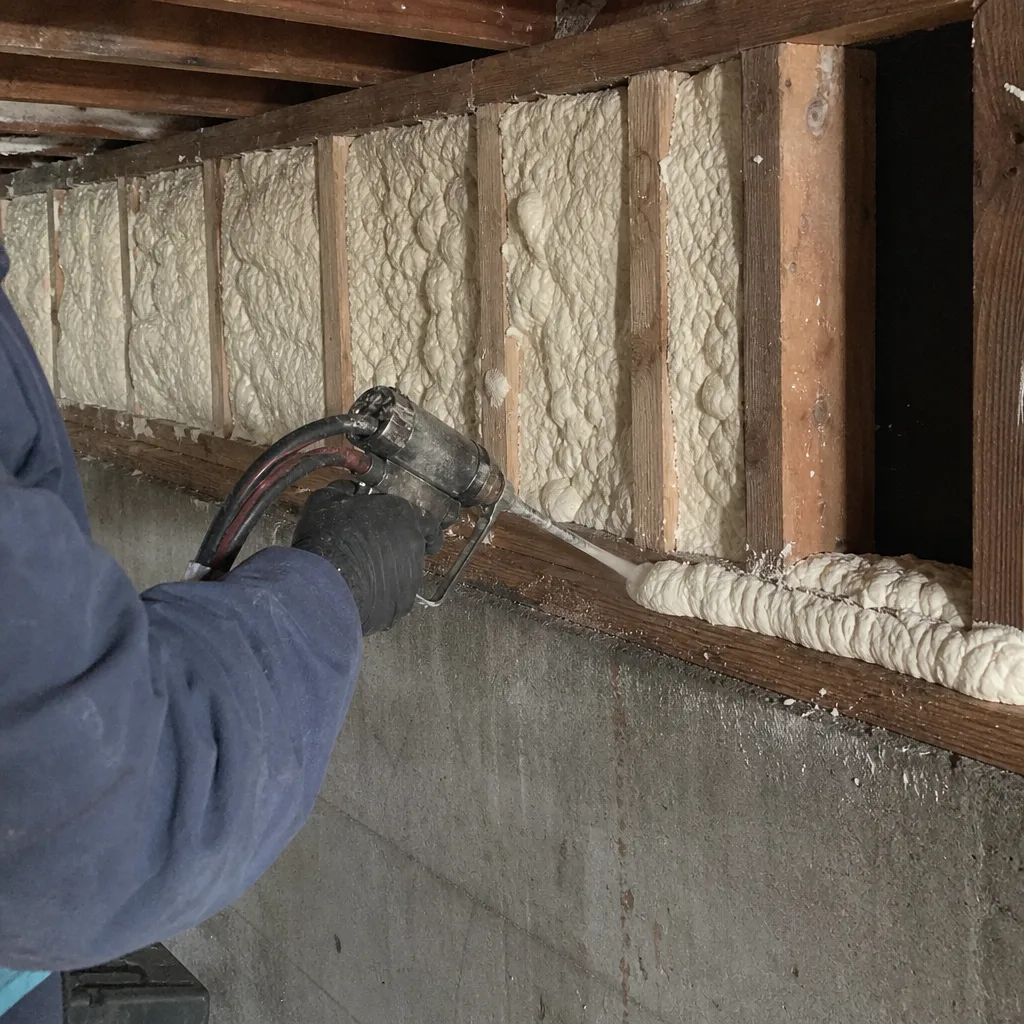
For attic insulation in Palmdale, the numbers vary by material type. Blown-in fiberglass typically runs $1.50 to $3.50 per square foot installed. Spray foam runs $2.50 to $6.00 per square foot for open-cell and $3.50 to $8.00 for closed-cell. Blown-in insulation in Palmdale is the most common choice for retrofit attics because it is cost-effective and installs quickly over existing insulation.
The correct way to read a bid is to demand itemization. A legitimate bid will specify the material (brand and type), the R-value, the square footage, the depth of installation, and any additional services like air sealing or baffle installation. A bid that says “attic insulation: $2,500” with no detail is not a bid. It is a guess.
What a Written Workmanship Guarantee Should Actually Say
“We stand behind our work” is a sentence, not a guarantee. In California, a verbal promise about workmanship is nearly impossible to enforce in small claims court. If a contractor will not put the terms in writing, you should assume the guarantee does not exist.
A legitimate written workmanship guarantee should include these five elements:
- Duration. The guarantee must state how long the workmanship is covered. Thirty days is weak. Ninety days is a reasonable minimum. A year or more signals real confidence in the work. Our 90-Day Done Right Promise covers the workmanship on every insulation job we complete in Palmdale.
- Scope. The guarantee must specify exactly what is covered. Workmanship means the quality of installation, not the material itself. Material warranties come from the manufacturer (Owens Corning, Rockwool, CertainTeed, Johns Manville all offer separate material warranties) and are typically 20 years to lifetime. The contractor’s workmanship guarantee covers how well the material was installed.
- Remedy. The guarantee must state what the contractor will do if the work fails. Will they repair it? Replace it? Refund the cost? “Make it right” is only meaningful if the document defines what “right” means. Our 90-Day Done Right Promise states plainly: if the work is not right, we make it right. That means we return, inspect, and correct the issue at our cost.
- Process. The guarantee must explain how you initiate a claim. Is there a phone number? An email? A time window for reporting? At Warmline, a live person answers every call 24/7, so initiating a claim is as simple as picking up the phone at (661) 613-2043.
- Exclusions. The guarantee must state what is not covered, such as damage from roof leaks, rodent re-infestation after rodent proofing, or homeowner modifications. A guarantee without exclusions is a guarantee written by someone who has not thought through the realities of residential construction.
When you read a guarantee, look for specificity. Vague language is a sign that the contractor has no intention of honoring the document. Specific language with named terms, durations, and remedies is a sign that the contractor has actually honored this guarantee before and knows exactly what it costs to do so.
Palmdale-Specific Red Flags to Watch For
Every market has its own version of the bad bid. Palmdale’s fast-growing housing market, with its mix of 1980s tract homes, newer Rancho Vista and Anaverde construction, and older housing stock near downtown, creates specific patterns we have seen repeat for years. Here are the red flags that show up most often in Palmdale.
- The quote that never mentions Title 24. Any insulation contractor quoting work in Palmdale should reference Title 24 compliance at least once. If the word “code” never appears in the bid or the conversation, the contractor is either unaware of California energy requirements or hoping you are unaware that the work needs to meet them.
- The attic inspection that never happens. A quote delivered without an attic inspection is not a quote. It is a guess dressed up as a number. Every legitimate insulation contractor in Palmdale will climb into the attic, measure the existing insulation depth, check for air leaks, and look at the ventilation before quoting a price. If someone quotes over the phone after asking “how big is your house,” hang up.
- The ventilation blind spot. We covered this earlier, but it deserves repeating because it is the most common omission we see from general contractors in Palmdale. Adding insulation to an attic without assessing ventilation is like adding a sweater to someone who is already overheating. In a Palmdale summer, that attic can hit 150 degrees, and improper ventilation will cook the new insulation’s performance down to marginal levels.
- The bid that uses R-30 for everything. R-30 is the previous code minimum for zone 14. It is no longer compliant for new attic insulation under the 2022 code, which requires R-38 minimum. A contractor still quoting R-30 as the standard for Palmdale attics is working from outdated information or cutting corners.
- The “we can start tomorrow” rush. Quality insulation work requires an inspection, material ordering (for spray foam insulation in Palmdale, the material must be mixed on site and applied with specialized equipment), and proper scheduling. A contractor who can start tomorrow for any job, any size, is either not busy for a reason or planning to cut corners.
- The neighbor discount without a license. Palmdale has a healthy handyman economy, and some of those handymen install insulation. The problem is that unlicensed work is illegal in California for any job over $500, and it voids your insurance coverage if something goes wrong. Verify the C-2 license before accepting any referral, no matter how well-meaning the neighbor.
The Step-by-Step Hiring Process in Palmdale
Here is the full process, laid out in order. Follow these steps and you will hire the right contractor the first time, without the three-summer learning curve that we see too often in Palmdale homes built in the 1990s and 2000s. Browse our more guides & resources for additional help.
- Assess your symptoms. Are your energy bills climbing each summer? Are some rooms 10 degrees warmer than others in July? Is your attic dusty, damp, or showing signs of rodent activity? Write down what you are experiencing. These symptoms tell a qualified contractor where to look first.
- Build a list of 3-5 contractors. Start with referrals from neighbors who have had insulation work done in the past five years. Add companies you find through local searches. Check each contractor’s license on the CSLB database before you call. Eliminate anyone without a C-2 classification.
- Call each contractor and ask the five questions. The questions in the section above take about ten minutes to ask. The answers will eliminate most of your list. If a contractor cannot answer the air sealing question, the ventilation question, or the Title 24 question, move on. At Warmline, a live person answers every call 24/7, so you will get answers immediately, not a voicemail promise to call back.
- Schedule attic inspections with the remaining 2-3 contractors. Each inspection should include an attic visit, a measurement of existing insulation, an assessment of air leaks and ventilation, and a discussion of your symptoms. Expect the inspector to spend 30-60 minutes in your home.
- Review the written bids. Each bid should itemize the material type and brand (Johns Manville, Knauf, Rockwool, CertainTeed are all benchmark manufacturers), the R-value, the square footage, the depth, the air sealing scope, the ventilation work, and the total price. Compare the bids using the cost-per-installed-R method described earlier.
- Verify insurance and workers’ compensation. Ask for a certificate of insurance naming you as the certificate holder. Any contractor who hesitates to provide proof of insurance is not a contractor you want working in your home.
- Review the written workmanship guarantee. Read it before you sign anything. Make sure it has a duration, a defined scope, a stated remedy, a clear claims process, and fair exclusions.
- Sign the contract and schedule the work. Most insulation jobs in Palmdale are completed in a single visit. Blown-in insulation in a standard 1,500-square-foot attic takes four to six hours. Spray foam takes six to eight hours. Crawl space encapsulation takes one to two days depending on the condition of the space.
- Walk through the completed work. After the job is done, ask the crew to show you the finished attic or crawl space. Look for even coverage, clean edges around the attic hatch, and clear documentation of the R-value installed. Verify that air sealing was done where promised.
- Keep your paperwork. File the contract, the warranty, and the insurance certificate together. If anything fails during the warranty period, call the contractor immediately. Our 90-Day Done Right Promise means we return, inspect, and correct the issue at our cost, no argument.
Common Mistakes to Avoid
- Hiring on price alone. The cheapest bid in Palmdale insulation work is usually missing something: air sealing, proper R-value, ventilation assessment, or all three. Remember the cost-per-installed-R calculation. The cheapest total price is often the most expensive per unit of actual performance.
- Skipping the license check. It takes 90 seconds on the CSLB website and eliminates the riskiest contractors from your list. We have seen too many Palmdale homeowners discover after the fact that their contractor held a B license, not a C-2, and could not demonstrate insulation competency if asked.
- Accepting a quote without an attic inspection. No legitimate contractor can quote insulation work without seeing the attic. The depth of existing insulation, the condition of the air sealing, the ventilation setup, and the access all affect the price. A phone quote is a guess.
- Ignoring air sealing. Insulation without air sealing is like a winter coat with the zipper open. The air movement through gaps and penetrations defeats the insulation’s performance. Air sealing is not an upsell; it is essential to the function of the insulation.
- Assuming the material warranty covers installation. The manufacturer warranty covers defects in the material. It does not cover poor installation. If the contractor installs the material incorrectly and the manufacturer determines the failure was installation-related, the manufacturer warranty is void and you are left with the contractor’s workmanship guarantee. That is why the written workmanship guarantee matters so much.
- Overlooking the ventilation question. In Palmdale’s heat, ventilation is not optional. An attic without proper airflow will trap heat and moisture, reducing the insulation’s effectiveness and risking mold and structural damage. If your contractor does not mention ventilation, find a different contractor.
When to Call a Professional
Some insulation issues are obvious: you can see bare spots in the attic, feel drafts around outlets, or notice that one room is consistently 10 degrees warmer than the rest of the house. Others are quieter: rising energy bills without an obvious cause, persistent dust, unexplained dampness in the crawl space. If you have any doubt about the condition of your insulation or air sealing, call a professional for an inspection. Attic work in Palmdale summers is genuinely dangerous; attics regularly exceed 130 degrees, and entering one without proper ventilation and protective equipment poses real health risks. The same applies to crawl spaces, where exposed wiring, sharp debris, and wildlife are common. Warmline Insulation Co. offers free estimates throughout Palmdale, and a live person answers at (661) 613-2043 around the clock. Call for an assessment and get a written bid with specifics before you commit to anything.
Frequently Asked Questions
Attic insulation in Palmdale typically costs between $1.50 and $3.50 per square foot for blown-in fiberglass, with most attics in the 1,200 to 1,800-square-foot range totaling $1,800 to $5,000 depending on depth and air sealing scope. Spray foam runs $2.50 to $6.00 per square foot for open-cell and $3.50 to $8.00 for closed-cell. Call (661) 613-2043 for a free estimate with exact pricing after an attic inspection, and ask about the $50 Off Any Repair Over $250 offer.
Replacement almost always costs more than repair in the short term, but repair is only worth doing if the existing insulation is structurally intact, dry, and not contaminated by rodents or mold. In Palmdale’s climate, insulation that has been in place for 20-plus years has often settled, compressed, and lost R-value. If the material is damp, rodent-soiled, or compressed below its rated depth, replacement is the better financial decision. The $89 Seasonal Tune-Up from Warmline includes an inspection of your existing insulation and an honest recommendation on repair versus replacement.
We complete most insulation jobs in Palmdale in a single visit, and same-day or next-day scheduling is often available for straightforward blown-in insulation and air sealing work. Spray foam and crawl space encapsulation require more lead time for material preparation. Call (661) 613-2043 and a live person will tell you exactly what is possible on your timeline, 24/7.
Palmdale sits in California climate zone 14, which requires R-38 minimum attic insulation under the current Title 24 energy code. Walls should be insulated to R-13 to R-15 in standard 2×4 or 2×6 framing. If your home was built before 2000, there is a good chance the attic insulation falls below current code minimums. An inspection will confirm exactly what you have and what you need.
Most retrofit insulation work done in existing homes does not require a building permit in Palmdale, as long as the work does not involve structural changes. However, the work must still meet Title 24 performance requirements, and any electrical or ventilation changes may trigger permit requirements. A licensed C-2 contractor will know when a permit is needed and will handle the paperwork correctly. For more details, read Insulation Permits, Codes & Inspections in CA: What You Need to Know.
Blown-in insulation, typically fiberglass or cellulose, is loose material pneumatically installed to fill the attic cavity at a cost-effective price point. Spray foam insulation is a two-part chemical mixture applied as a liquid that expands into a rigid foam, sealing gaps and insulating simultaneously at a higher price point. In Palmdale attics, blown-in is the most common choice for retrofit situations, while spray foam is preferred for air sealing performance, hard-to-reach spaces, and homes with existing moisture or air infiltration issues. Both materials perform well when installed by a contractor who understands the building science behind them.
The Bottom Line
Hiring the right insulation contractor in Palmdale comes down to four things: verifying the C-2 license, asking the building-science questions, comparing bids by cost-per-installed-R, and getting a written workmanship guarantee with specific terms. Skip any of these steps and you are gambling with your utility bills, your indoor comfort, and the long-term health of your home’s building envelope. The good contractors make all four steps easy. They answer the questions directly, they itemize their bids, they put the guarantee in writing, and they treat your attic as a system rather than a line item. Warmline Insulation Co. has served Palmdale since 2011 with licensed, insured, background-checked technicians, a 90-Day Done Right Promise, and pricing that is upfront with no surprises. Visit the Warmline Insulation Co. home page to see the full scope of our services, or call (661) 613-2043 for a free estimate. A live person answers around the clock.
Written by Neil Ashford, Owner at Warmline Insulation Co., serving Palmdale since 2011.